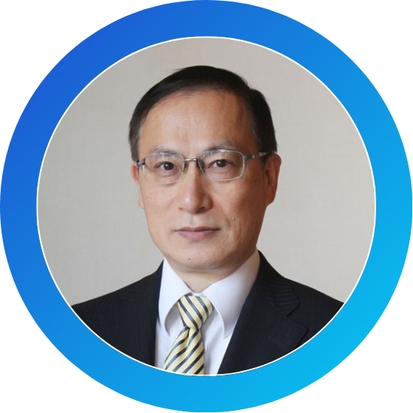
Speaker Bio: Yasushi Asami is an Executive Director and Vice President, Director of Center for Research and Development of Higher Education, and a Project Professor of the Center for Spatial Information Science at the University of Tokyo. He graduated from the University of Tokyo and got Ph.D. from the University of Pennsylvania. His research interest includes city planning, housing policy, real estate analysis, and spatial information science. He served as the President of the Geographic Information System Association and the Japan Association for Planning and Public Management.
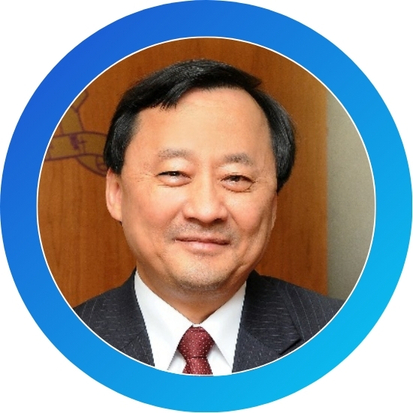
Speaker Bio: WAH Wan-Sang Benjamin, BBS, JP, is an Emeritus Professor at the Chinese University of Hong Kong (CUHK) and Franklin W. Woeltge Emeritus Professor of Electrical and Computer Engineering at the University of Illinois, Urbana-Champaign (UIUC), USA. He previously served as Provost and Wei Lun Professor of Computer Science and Engineering of CUHK (2010-2019), Chair of the Research Grants Council of Hong Kong (2013-2018), and Franklin W. Woeltge Professor of UIUC. He received his Ph.D. degree in computer science from the University of California, Berkeley, CA, USA. Wah's contributions to computer science and engineering have been recognized with numerous prestigious awards. These include the IEEE CS Technical Achievement Award, the IEEE Millennium Medal, the IEEE-CS W. Wallace-McDowell Award, the IEEE-CS Richard E. Merwin Award, the IEEE-CS Tsutomu Kanai Award, and the Distinguished Alumni Award in Computer Science of the University of California, Berkeley. In 2026, he was awarded an Honorary Fellow of CUHK for his contributions. His current research interests in big data and multimedia systems have led to significant advancements in these areas. He has served the IEEE Computer Society in various capacities, including Vice President for Publications (1998 and 1999) and President (2001). He currently serves as the Chair of the INNO Hong Kong Steering Committee. He is a Fellow of the American Association for the Advancement of Science (AAAS) and the Association of Computing Machinery (ACM), as well as a Life Fellow of the Institute of Electrical and Electronics Engineers (IEEE).

Speaker Bio: TBA

Speaker Bio: Ryan Baker is Professor of Artificial Intelligence and Education at Adelaide University and Director of the Penn Center for Learning Analytics at the University of Pennsylvania. Baker has developed models that can automatically detect student engagement in over a dozen online learning environments, and led the development of an observational protocol and app for field observation of student engagement that has been used by over 150 researchers in 7 countries. Predictive analytics models he helped develop have been used to benefit over two million students, over a hundred thousand people have taken MOOCs he ran, and he has coordinated longitudinal studies that spanned over a decade. Baker was the founding president of the International Educational Data Mining Society, is Associate Editor of the Journal of Educational Data Mining, was the first technical director of the Pittsburgh Science of Learning Center DataShop, currently serves as Co-Director of the JeepyTA learning platform, and founded two Masters degree programs in Learning Analytics. Baker has co-authored published papers with over 600 colleagues and has been cited over 40,000 times.

Speaker Bio: Sangmin-Michelle Lee is a professor in the Department of XR-AI Convergence at Kyung Hee University, Korea. She received her Ph.D. from The Pennsylvania State University, USA. Her research focuses on technology-enhanced learning environments, machine translation, game-based learning, and computational creativity. She has published extensively in leading peer-reviewed journals, including Computer Assisted Language Learning, ReCALL, Language Learning & Technology, British Journal of Educational Technology, and Education and Information Technologies. She has led numerous R&D projects in technology-enhanced learning, including the development of AI-powered digital textbooks, explainable AI systems for teachers, and AI risk-management frameworks and checklists for educational contexts. She currently serves as an associate editor for Language Learning & Technology, Humanities and Social Sciences Communications, and JALT-CALL. Her recent work explores human–AI collaboration, learner agency, and creativity in AI-integrated XR learning environments, with a particular focus on how AI can function as a cognitive partner rather than a mere tool. She is especially interested in bridging learning theory, instructional design, and emerging AI technologies to support meaningful and equitable learning experiences.

Speaker Bio: Dr. Maiga Chang is Full Professor and Associate Dean, Research & Innovation at Faculty of Science and Technology, Athabasca University, Canada. He is IEEE Senior Member. Dr. Chang has been appointed as an IEEE Computer Society Distinguished Visitor for 2023 to 2025 and also received Distinguished Researcher Award from Asia Pacific Society on Computers in Education (APSCE) in 2022. Dr Chang's research mainly focus on artificial intelligence; natural language processing; intelligent agent and chatbot technology; game-based learning, training and assessment; learning behaviour analysis; learning analytics and academic analytics; health informatics; data mining; computational intelligence; museum education mobile learning and ubiquitous learning; healthcare technology, etc. Dr. Chang is now Vice President (2022~) of International Association of Smart Learning Environments (IASLE) and Vice Chair (2025~2026) of IEEE Northern Canada Section (https://northerncanada.ieee.ca/ncs-executives/). He is also Secretary (2025~2026) and board member (2022~2026) of IEEE Computer Society Technical & Conference Activities Board (2022~2026), Executive Committee member of Asia-Pacific Society for Computers in Education (2017~2028, APSCE) and Global Chinese Society for Computing in Education (2016~2029, GCSCE). Dr. Chang is also a Steering Committee member (2020~) for International Conference on Intelligent Tutoring Systems (ITS). Dr. Chang is Editor-in-Chief (2014~) of International Journal of Distance Education Technologies (Open Access ESCI in Quartile Q1 with rank 152/756 in Education & Educational Research category by Journal Citation Indicator according Web of Science Journal Citation Reports 2025, SCOPUS, EI), Editor-in-Chief (2020~) of Bulletin of Technical Committee on Learning Technology (no article processing fee Open Access ESCI journal), and Advisory Board Member of International Journal of Educational Technologies and Artificial Intelligence (2026~) and Journal of Computers and Applied Science Education (2014~2018). Dr. Chang has given more than 190 talks and lectures in different events; He also has (co-)authored more than 227 edited books, book chapters, journal and international conference papers. He is an IEEE member since 1996.